Seasonal Timeline
Early Fall Preparation (September-October)
Essential preparations before winter weather arrives
-
Schedule comprehensive winter inspection
Have a professional check battery, heating system, belts, hoses, and fluid levels. Address issues before emergency repairs become necessary in harsh weather.
-
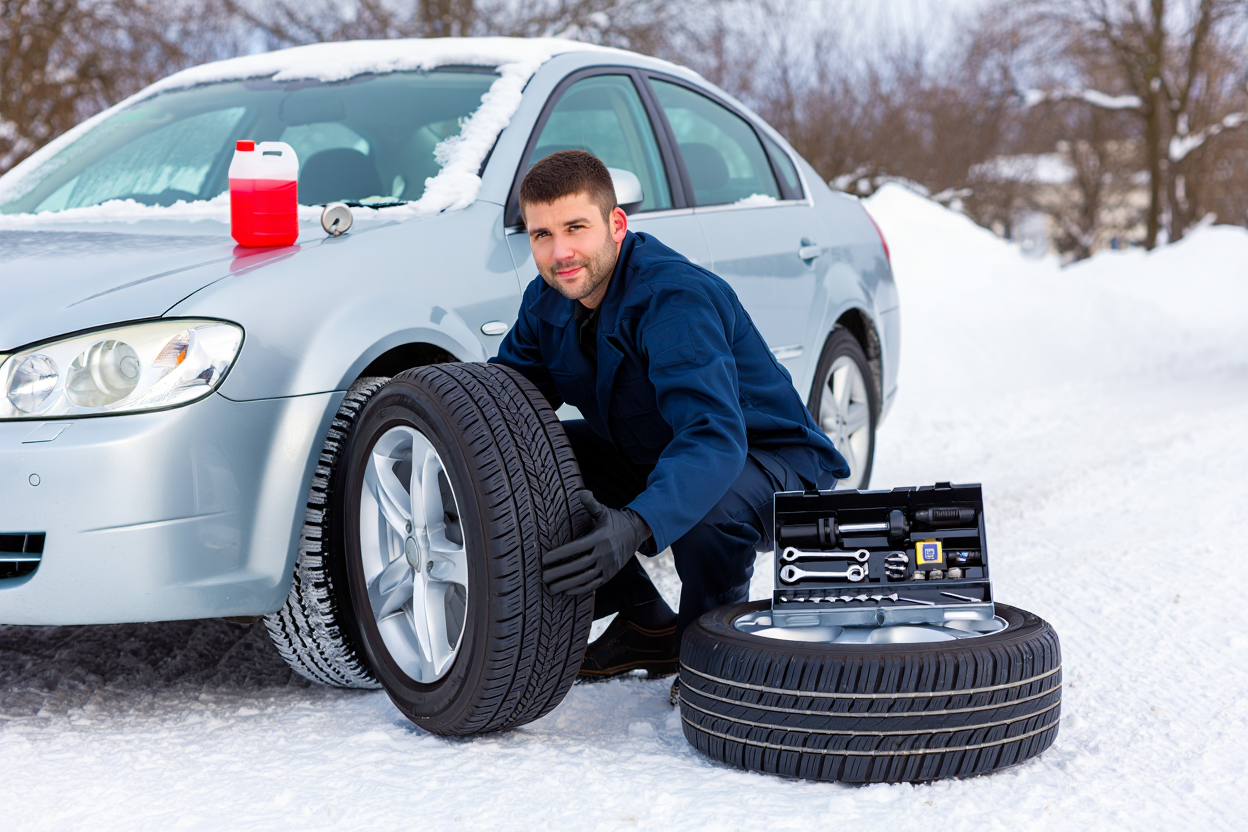
Install winter tires or check all-season treads
Winter tires provide 25-50% better traction below 45°F. All-season tires need minimum 6/32" tread depth for adequate snow performance.
-
Test battery and charging system
Cold weather reduces battery capacity by 50%. Replace batteries over 3 years old or testing below 12.4 volts to prevent winter starting failures.
-
Switch to winter-weight fluids
Change to 5W-30 or 0W-20 oil for easier starting. Check antifreeze protection to -20°F below expected temperatures in your area.
-
Prepare and stock emergency kit
Include blankets, flashlight, jumper cables, ice scraper, sand, emergency food, water, first aid kit, and warm clothing for each passenger.
Late Fall Final Prep (November)
Final preparations and testing before harsh winter conditions
-
Test heating and defrosting systems thoroughly
Ensure heater, defroster, heated mirrors, and rear window defroster work properly. Poor visibility and cabin heating are serious safety hazards.
-
Install and test snow chains or traction aids
Practice installation in good weather. Know your local chain laws and carry appropriate chains for your tire size if required in your area.
-
Update emergency contacts and roadside assistance
Ensure phone contacts include 24/7 towing, roadside assistance, and emergency contacts. Program numbers into phone and write backup copies.
-
Check 4WD/AWD systems if equipped
Test all-wheel drive or four-wheel drive systems before needing them. Ensure transfer case fluid is fresh and systems engage properly.
-
Plan alternative routes and communication strategy
Identify alternate routes avoiding steep hills or problematic areas. Establish check-in protocols for winter travel with family or coworkers.
Early Winter Operations (December-January)
Active winter driving period with ongoing maintenance needs
-
Monitor tire pressure weekly
Tire pressure drops 1-2 PSI per 10°F temperature decrease. Under-inflated tires have poor traction and are more likely to fail in winter conditions.
-
Clear all snow and ice before driving
Remove snow from entire vehicle including roof, lights, and windows. Ice or snow flying off can cause accidents and many states have fines for this.
-
Practice winter driving techniques in safe areas
Practice controlled braking, acceleration, and steering in empty parking lots. Learn how your vehicle responds to winter conditions before emergencies.
-
Maintain fuel levels above half tank
Keep tank at least half full to prevent fuel line freeze-up and ensure adequate fuel if stranded. Condensation in low tanks can cause ice formation.
-
Monitor weather and road conditions before travel
Check forecasts, road conditions, and traffic reports before departing. Delay or cancel non-essential trips during severe weather warnings.
Peak Winter Period (January-March)
Harshest conditions requiring maximum vigilance and maintenance
-
Wash undercarriage monthly to prevent salt damage
Road salt causes serious corrosion to brake lines, fuel lines, and suspension components. Monthly washing prevents thousands in future repairs.
-
Carry winter survival supplies on longer trips
Include extra food, water, medications, phone chargers, and warm clothing for potential extended delays or stranding during storm conditions.
-
Monitor battery performance closely
Watch for slow cranking, dim lights, or electrical issues. Cold weather can quickly kill a weak battery, leaving you stranded in dangerous conditions.
-
Adjust driving habits for conditions
Increase following distances to 8-10 seconds, reduce speeds 50% on ice/snow, avoid cruise control, and use gentle inputs for acceleration and braking.
-
Maintain emergency communication plan
Keep phone charged, carry backup power sources, and inform others of travel plans. Have contingency plans for delayed arrivals or route changes.
Quick Reference Calendar
| Month | Tasks | Period |
|---|---|---|
| January | 10 tasks | Early Winter Operations (December-January)Peak Winter Period (January-March) |
| February | 0 tasks | |
| March | 5 tasks | Peak Winter Period (January-March) |
| April | 0 tasks | |
| May | 0 tasks | |
| June | 0 tasks | |
| July | 0 tasks | |
| August | 0 tasks | |
| September | 5 tasks | Early Fall Preparation (September-October) |
| October | 5 tasks | Early Fall Preparation (September-October) |
| November | 5 tasks | Late Fall Final Prep (November) |
| December | 5 tasks | Early Winter Operations (December-January) |
Pro Tips
Practice emergency maneuvers like controlled slides and recovery steering in empty parking lots during light snow - muscle memory from practice can prevent accidents
If you start sliding, look and steer where you want to go, not at the obstacle you want to avoid - your vehicle tends to go where youre looking
Keep a small bag of sand or clay-based cat litter for emergency traction - 10 pounds in the trunk also improves rear-wheel drive traction balance