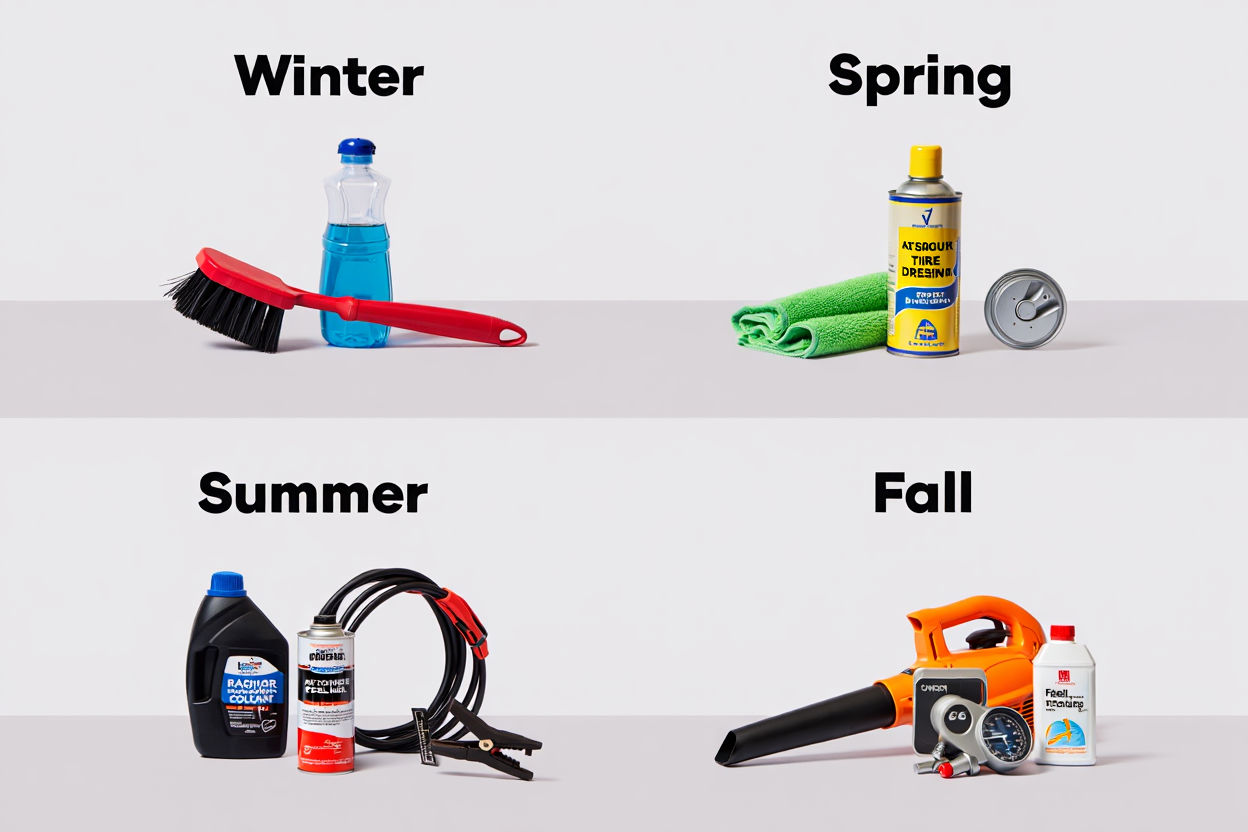
Seasonal Timeline
Spring (March-May)
Recovery from winter damage and preparation for summer driving
-
Comprehensive spring inspection
Check for winter damage including undercarriage salt corrosion, cracked belts from cold, and worn wipers. Address issues before they worsen.
-
Change engine oil and filter
Winter driving is hard on oil. Switch from winter weight oil if used, and reset maintenance schedules for increased spring/summer driving.
-
Inspect and rotate tires
Check for uneven winter wear, proper pressure, and tread depth. Rotate tires to ensure even wear and switch to all-season tires if needed.
-
Test and clean air conditioning system
Run AC system to check for leaks or issues before hot weather. Replace cabin air filter and clean vents for optimal summer performance.
-
Wash and wax exterior thoroughly
Remove winter salt and road chemicals that cause rust. Apply protective wax coating before summer UV exposure increases paint damage.
Summer (June-August)
High-temperature operation and vacation travel preparation
-
Monitor cooling system performance
Check coolant levels weekly, watch for leaks or overheating. Summer heat stresses cooling systems and can cause expensive engine damage.
-
Check tire pressure and condition frequently
Heat increases tire pressure and accelerates wear. Check weekly and look for signs of heat damage or separation. Under-inflated tires can blow out.
-
Prepare for long-distance travel
Before road trips, inspect belts, hoses, brakes, and fluid levels. Carry emergency supplies including extra coolant, oil, and roadside assistance info.
-
Maintain battery and charging system
Heat kills batteries faster than cold. Test battery, clean terminals, and check alternator output. Replace aging batteries before summer heat kills them.
-
Replace windshield wipers and check fluids
Summer storms require good visibility. Replace worn wipers and ensure washer fluid reservoir is full with summer formula.
Fall (September-November)
Preparation for winter weather and colder temperatures
-
Complete winter preparation inspection
Check heating system, battery strength, tire tread for winter traction, and all fluid levels. Address any issues before cold weather hits.
-
Switch to winter tires or check all-seasons
If using winter tires, switch when temperatures consistently drop below 45°F. Check all-season tire tread depth - need 6/32" for snow traction.
-
Change to winter-weight oil if needed
In climates with freezing temperatures, switch to lower viscosity oil (5W-30 or 0W-20) for easier cold-weather starting.
-
Test battery and charging system thoroughly
Cold weather reduces battery capacity by 50%. Test battery, clean terminals, and replace if more than 3 years old or testing weak.
-
Prepare emergency winter kit
Stock blanket, flashlight, jumper cables, ice scraper, sand/salt, emergency food, and warm clothes. Update emergency contacts and roadside assistance info.
Winter (December-February)
Cold weather operation and harsh condition management
-
Monitor battery performance and connections
Cold weather starting draws maximum power from battery. Keep terminals clean, check connections monthly, and watch for slow cranking signs.
-
Check tire pressure and traction regularly
Tire pressure drops 1-2 PSI for every 10°F temperature drop. Check weekly and inspect for adequate tread depth on snow/ice.
-
Protect against salt and road chemical damage
Wash undercarriage monthly to remove corrosive salt. Pay attention to brake lines, fuel lines, and suspension components most at risk.
-
Maintain fuel system and prevent freeze-ups
Keep fuel tank at least half full to prevent condensation and ice formation. Consider fuel line antifreeze in extremely cold climates.
-
Monitor heating and defrosting systems
Ensure heater, defroster, and heated mirrors work properly. Poor visibility and cabin heating are safety issues in winter driving.
Quick Reference Calendar
| Month | Tasks | Period |
|---|---|---|
| January | 0 tasks | |
| February | 5 tasks | Winter (December-February) |
| March | 5 tasks | Spring (March-May) |
| April | 0 tasks | |
| May | 5 tasks | Spring (March-May) |
| June | 5 tasks | Summer (June-August) |
| July | 0 tasks | |
| August | 5 tasks | Summer (June-August) |
| September | 5 tasks | Fall (September-November) |
| October | 0 tasks | |
| November | 5 tasks | Fall (September-November) |
| December | 5 tasks | Winter (December-February) |
Pro Tips
Keep a maintenance log with dates and mileage - this helps identify patterns, maintains warranty coverage, and increases resale value by $500-1500
Address small issues immediately in winter - a $50 repair can become a $500 repair if cold weather worsens the problem or leaves you stranded
Many auto parts stores offer free battery and alternator testing year-round - take advantage of these services during seasonal inspections