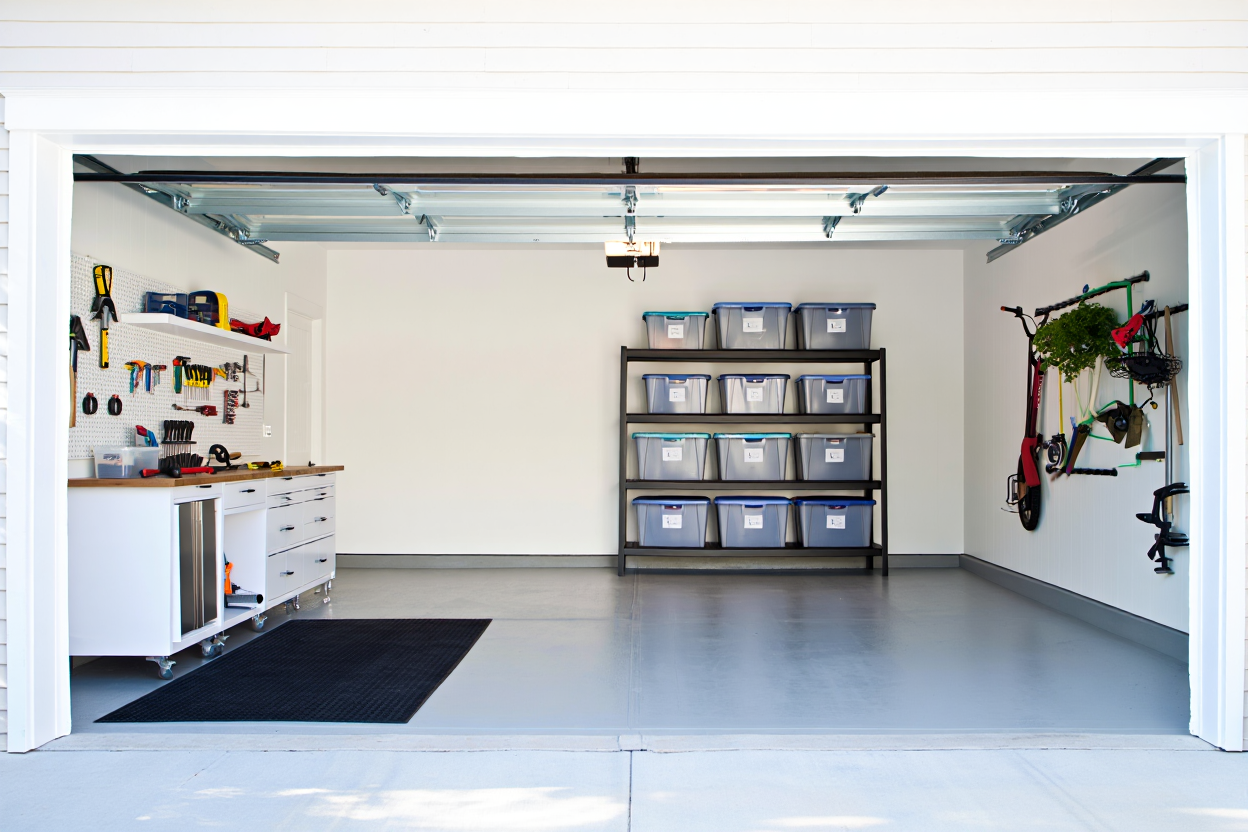
1. Install Slatwall Storage Systems
Mount slatwall panels for flexible, customizable storage that adapts as your needs change. Easily move hooks and shelves.
2. Use Overhead Storage Racks
Install ceiling-mounted racks for seasonal items, holiday decorations, and rarely used equipment to free up floor space.
3. Mount Pegboard for Tools
Create an organized tool display with pegboard and hooks. Outline tools with markers so everything has a designated spot.
4. Create Mobile Storage Carts
Use rolling carts for lawn care supplies, automotive items, or sports equipment that need to move between storage and use.
5. Install Heavy-Duty Shelving Units
Use metal shelving for paint, chemicals, and heavy items. Keep hazardous materials on upper shelves away from children.
6. Design Parking Guidelines
Use floor tape or parking mats to mark vehicle boundaries, ensuring adequate space for walking and storage access.
7. Install Bike Hanging Systems
Use wall or ceiling bike hooks to store bicycles vertically, freeing up valuable floor space for other items.
8. Create a Garden Tool Station
Use a tall narrow cabinet or corner rack specifically for rakes, shovels, and long-handled garden tools.
Bonus Tip
Schedule a seasonal garage organization session every spring and fall to maintain order and swap out seasonal items efficiently.
What to Avoid
- Storing paint and chemicals in extreme temperatures
- Blocking access to electrical panels or water shut-offs
- Using garage organization systems that are not appropriate for temperature fluctuations
- Storing items directly on concrete floors where moisture can cause damage
- Creating storage zones that block vehicle doors or emergency exits