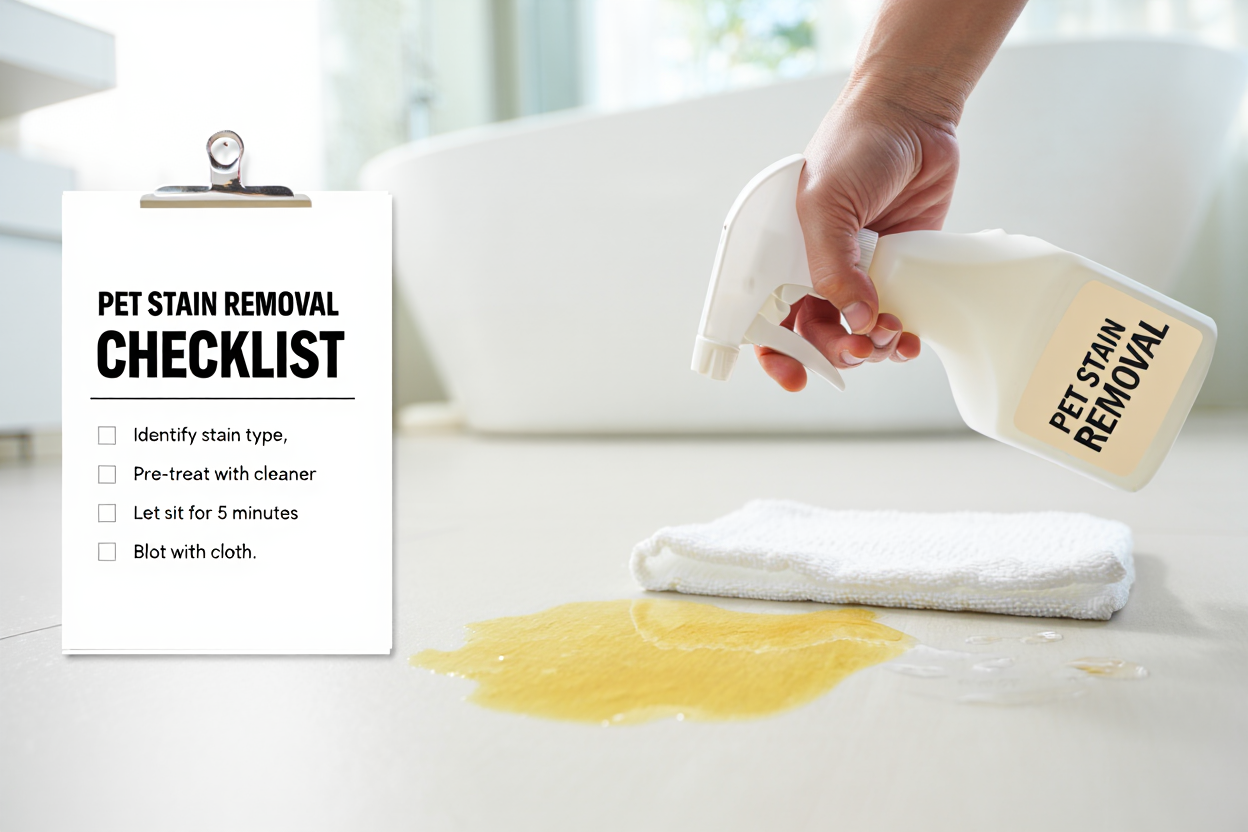
Immediate Response (First 15 Minutes)
-
Blot liquid stains immediately with paper towels
Prevents stain from spreading and penetrating deeper into fibers
-
Remove solid waste with plastic bags or gloves
Prevents grinding waste into carpet fibers and reduces odor sources
-
Rinse area with cold water (not hot)
Hot water sets protein-based stains permanently
-
Test cleaning solution on hidden area first
Prevents color damage or fabric degradation
Deep Cleaning Process
-
Apply enzymatic cleaner to affected area
Breaks down odor-causing bacteria that attract repeat accidents
-
Let cleaner sit for recommended time
Gives enzymes time to break down organic compounds
-
Blot with clean cloth, don't rub
Rubbing pushes stain deeper into fibers
-
Rinse thoroughly with clean water
Removes cleaning residue that can attract dirt
Pro Tips
Keep a pet stain emergency kit: enzymatic cleaner, microfiber cloths, spray bottles, and plastic gloves in an easily accessible location.
Invest in a blacklight flashlight to detect dried urine stains invisible to the naked eye.
Never use ammonia-based cleaners on pet urine - pets may mistake the scent for their own marking.
For valuable rugs, take photos and contact your insurance company before attempting cleaning.
Mix your own emergency cleaner: 1 cup white vinegar + 1 cup warm water + 2 tablespoons baking soda.
Common Mistakes to Avoid
Using steam cleaners on urine stains - the heat sets the protein and makes odors permanent
Cleaning with bleach or ammonia products that can create toxic fumes when mixed with urine
Soaking stains with too much water, causing damage to subfloors and carpet padding
Assuming the stain is gone when you can't smell it - pets have much stronger noses