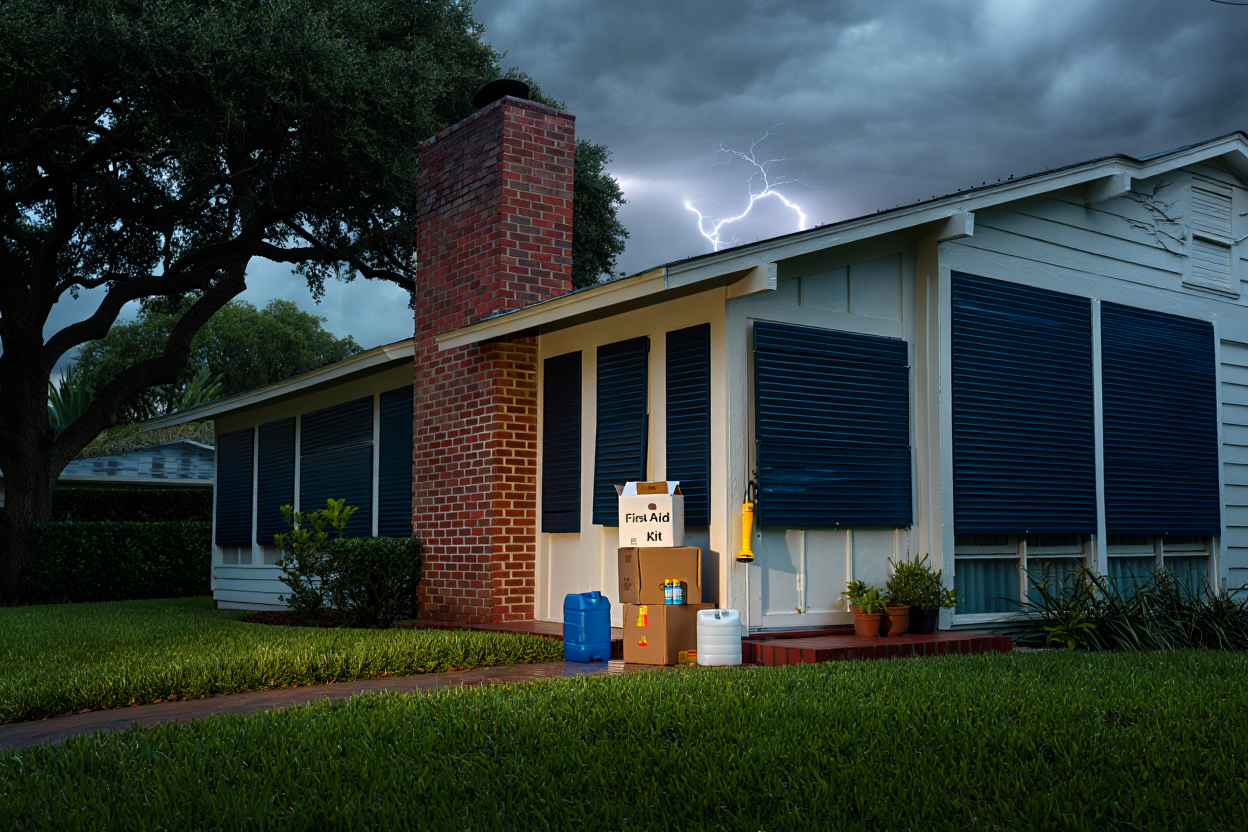
Seasonal Timeline
Spring (March-May)
Severe Weather Season Preparation
-
Inspect roof for winter damage and loose materials
Prevent debris from becoming projectiles in high winds
-
Trim trees and remove dead branches near house
Eliminate potential falling hazards during storms
-
Check and secure outdoor furniture and equipment
Prevent wind-blown damage to property and neighbors
-
Test backup generator and fuel system
Ensure power backup works when storms knock out electricity
-
Review and update emergency supply kit
Ensure adequate supplies for extended power outages
-
Install storm shutters or board-up materials
Protect windows from high winds and flying debris
-
Check sump pump and drainage systems
Prevent basement flooding during heavy spring rains
-
Secure loose siding, gutters, and trim
Prevent structural damage from high winds
-
Create digital copies of important documents
Protect critical records from water and wind damage
Summer (June-August)
Hurricane & Severe Storm Readiness
-
Monitor weather forecasts and warnings daily
Provides maximum time to prepare for approaching storms
-
Maintain emergency communication devices
Ensure ability to receive warnings and contact help
-
Check and maintain storm drainage around property
Prevent water accumulation and flooding
-
Keep vehicles fueled and evacuation routes planned
Enable quick evacuation if authorities recommend leaving
-
Stock non-perishable food and water supplies
Sustain family during extended power outages
-
Maintain flashlights and battery-powered radio
Provide light and information during power outages
-
Regular generator testing and fuel rotation
Ensure backup power source remains reliable
-
Keep chain saw and hand tools accessible
Enable quick cleanup of fallen trees and debris
-
Photograph property for insurance documentation
Provide evidence for potential insurance claims
Fall/Winter (September-February)
Winter Storm & Wind Preparation
-
Winterize outdoor plumbing and water systems
Prevent freeze damage during winter storms
-
Stock winter storm supplies (salt, sand, blankets)
Maintain safety and warmth during ice storms
-
Check heating system backup and ventilation
Ensure safe heating during power outages
-
Install snow and ice removal equipment
Maintain access and prevent roof collapse
-
Seal air leaks to prevent ice dams
Prevent water damage from ice buildup
-
Keep emergency heat sources safe and ready
Provide backup warmth if main heating fails
-
Maintain carbon monoxide detectors
Prevent poisoning from alternative heating sources
-
Plan for pet care during evacuation
Ensure all family members can evacuate safely
-
Review insurance coverage annually
Ensure adequate protection for storm damage
Quick Reference Calendar
| Month | Tasks | Period |
|---|---|---|
| January | 0 tasks | |
| February | 9 tasks | Fall/Winter (September-February) |
| March | 9 tasks | Spring (March-May) |
| April | 0 tasks | |
| May | 9 tasks | Spring (March-May) |
| June | 9 tasks | Summer (June-August) |
| July | 0 tasks | |
| August | 9 tasks | Summer (June-August) |
| September | 9 tasks | Fall/Winter (September-February) |
| October | 0 tasks | |
| November | 0 tasks | |
| December | 0 tasks |
Pro Tips
Create a 'go bag' that's always ready with essentials — when evacuation orders come, you won't have time to pack
Practice your emergency plan with the whole family — everyone should know evacuation routes and meeting points
Keep important documents in a waterproof container that's easy to grab quickly
Install a whole-house surge protector — it's cheaper than replacing all your electronics after a storm
Consider impact-resistant windows in storm-prone areas — they can significantly reduce insurance premiums while protecting your home