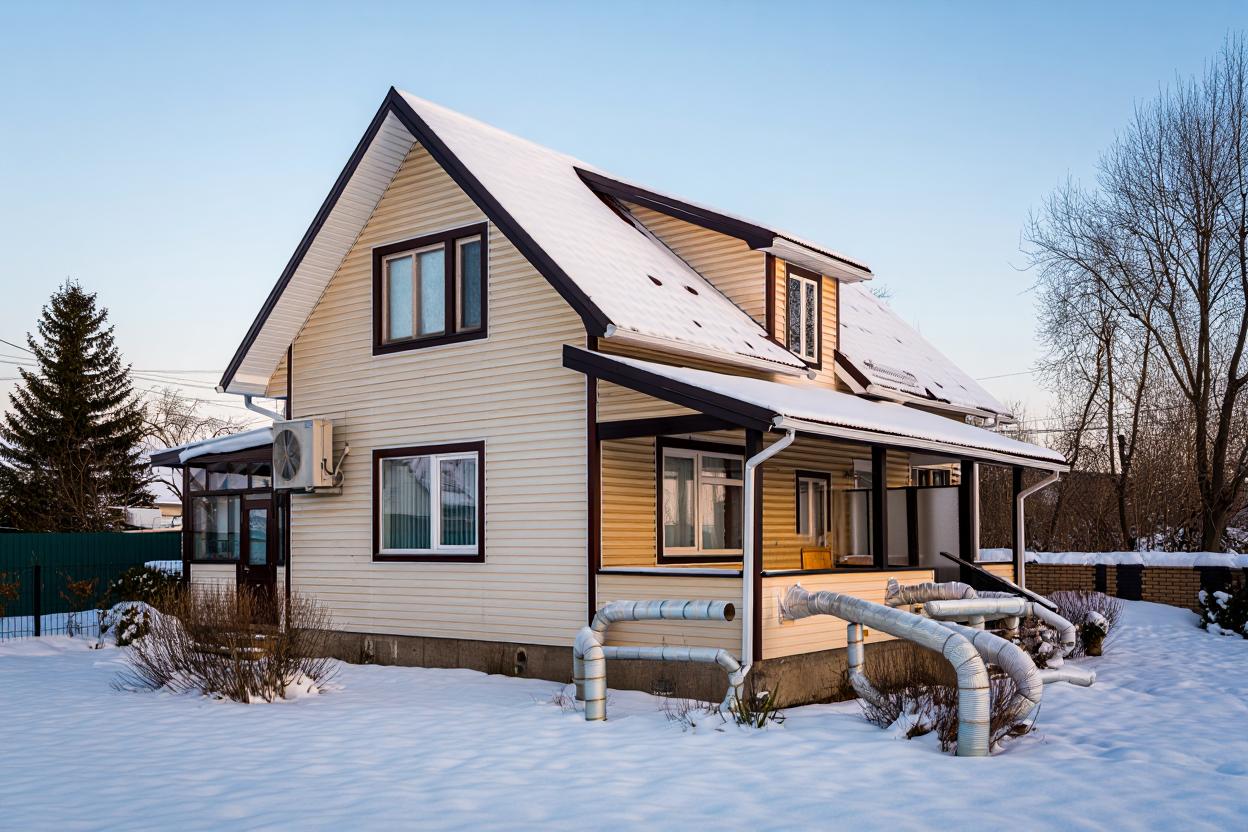
1. Insulate pipes in unheated areas with foam sleeves
Basement, crawl space, and attic pipes freeze first. Foam pipe insulation costs $20-40 but prevents $5,000+ in burst pipe damage and water restoration costs.
2. Disconnect and drain outdoor hoses and faucets
Water left in hoses and outdoor faucets expands when frozen, cracking pipes inside walls. Disconnect hoses, turn off water supply, and open outdoor faucets to drain completely.
3. Know location of main water shutoff valve
Quick water shutoff prevents catastrophic damage if pipes burst. Practice turning it off and teach family members. Place a bright tag or sign for emergency identification.
4. Maintain indoor temperature above 55°F even when away
Pipes can freeze in as little as 6 hours at 20°F. Keep heat on during vacations and maintain basement temperature. The heating cost is minimal compared to pipe repair expenses.
5. Replace furnace filters and schedule professional tune-up
Clean systems run 15% more efficiently and last longer. Annual maintenance prevents mid-winter breakdowns when repair costs double and technicians are scarce.
6. Test and clean fireplace and chimney before first use
Dirty chimneys cause house fires and carbon monoxide poisoning. Professional cleaning costs $100-200 but prevents thousands in fire damage and potential fatalities.
7. Seal gaps around windows and doors with weatherstripping
Air leaks increase heating costs by 20-30%. Weatherstripping and caulk cost $30-50 but save $200+ annually on energy bills while improving comfort.
8. Program thermostat for efficient heating schedules
Lower temperatures by 7-10 degrees during sleep and away periods. Programmable thermostats pay for themselves in 2 years through energy savings.
9. Clean gutters and install ice dam prevention
Clogged gutters create ice dams that force water under shingles, causing roof leaks and interior damage. Clean gutters and consider heat cables in problem areas.
10. Trim tree branches hanging over roof and power lines
Ice-laden branches become heavy and brittle, falling on roofs and causing power outages. Trim branches within 10 feet of house and power lines before storms hit.
11. Store outdoor furniture and equipment properly
Winter weather damages deck furniture, grills, and garden equipment. Clean and store in garage or shed, or cover with waterproof tarps rated for winter conditions.
12. Apply ice melt to walkways before storms
Pretreatment prevents ice bond formation, making snow removal easier and safer. Use calcium chloride for temperatures below 15°F, avoiding salt damage to plants and concrete.
13. Check and stock emergency supplies
Winter storms cause power outages and prevent travel. Stock flashlights, batteries, water, non-perishable food, and backup heating sources for 72-hour self-sufficiency.
Bonus Tip
Create a winter emergency contact list including your utilities, plumber, electrician, and heating contractor. Program these numbers in your phone before you need them. Many contractors offer priority service contracts that guarantee faster response during emergencies.
What to Avoid
- Using space heaters as primary heating - they are fire hazards and cost 3x more than central heat
- Leaving cabinet doors closed in freezing weather - open them to let warm air circulate around pipes
- Ignoring small leaks or drafts - they become major problems when temperatures drop below freezing