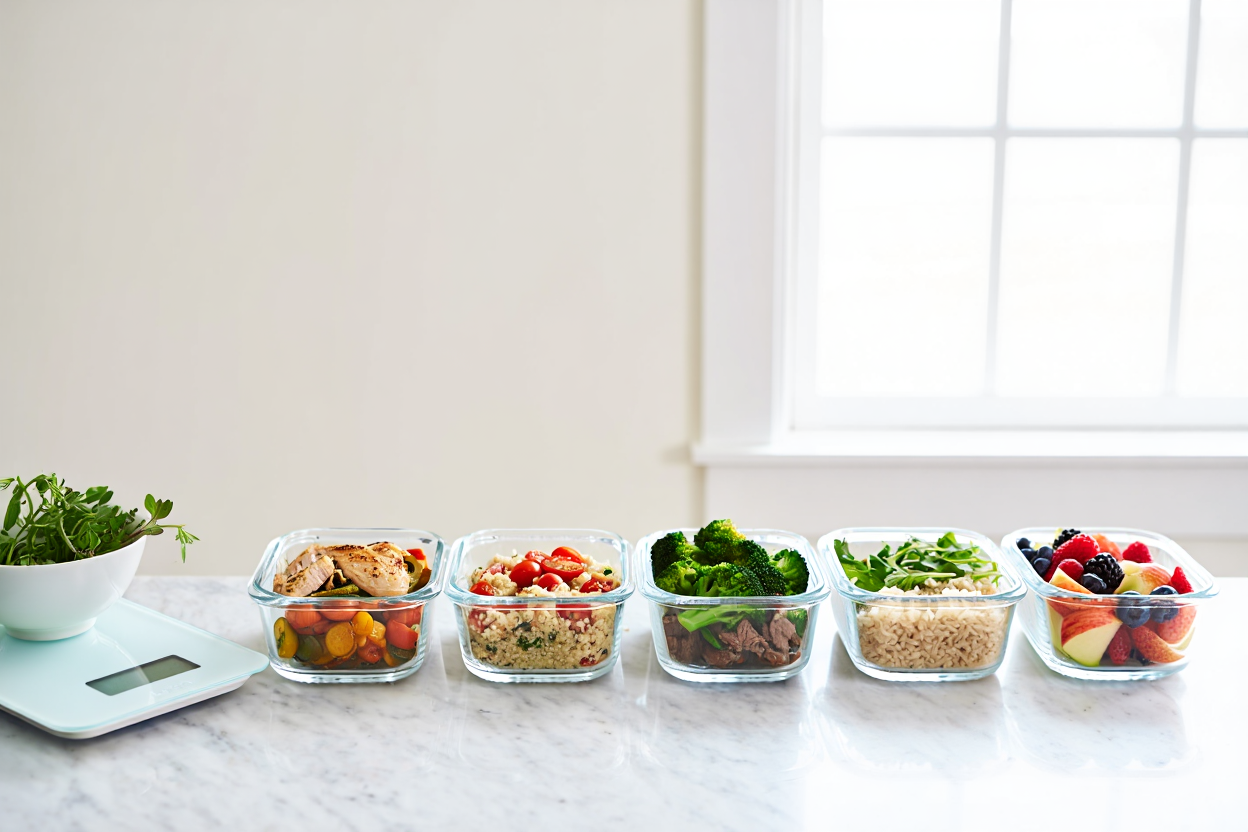
1. Pick 2 proteins, 2 carbs, 2 vegetables
Simple combinations prevent boredom while staying efficient.
2. Shop with a macro-first list
Buy protein targets first, then produce, then carbs/fats.
3. Use repeating breakfasts
Automating one meal saves hundreds of choices per month.
4. Set a prep cap
Limit prep to 90 minutes so it stays sustainable.
5. Cook proteins in bulk batches
Sheet-pan chicken, turkey, tofu, or salmon cuts weekday friction.
6. Use a food scale for staples
Rice, oats, and oils are easy to underestimate.
7. Pre-portion calorie-dense foods
Nuts, dressing, and cheese should be measured in advance.
8. Build high-volume plates
Use fibrous vegetables to increase fullness at lower calories.
9. Keep a freezer buffer
Freeze 2-3 extra meals to avoid takeout emergencies.
10. Keep 2 emergency meals at work
Protein bars + tuna/rice cups beat vending machines.
11. Log meals before eating
Pre-logging reduces impulsive additions.
12. Review adherence weekly
Adjust portions if weight trend stalls for 2+ weeks.
Bonus Tip
Create a 5-meal rotation and repeat it for 4 weeks before changing anything.
What to Avoid
- Preparing 10 new recipes at once
- Ignoring food safety storage windows
- Not seasoning food enough