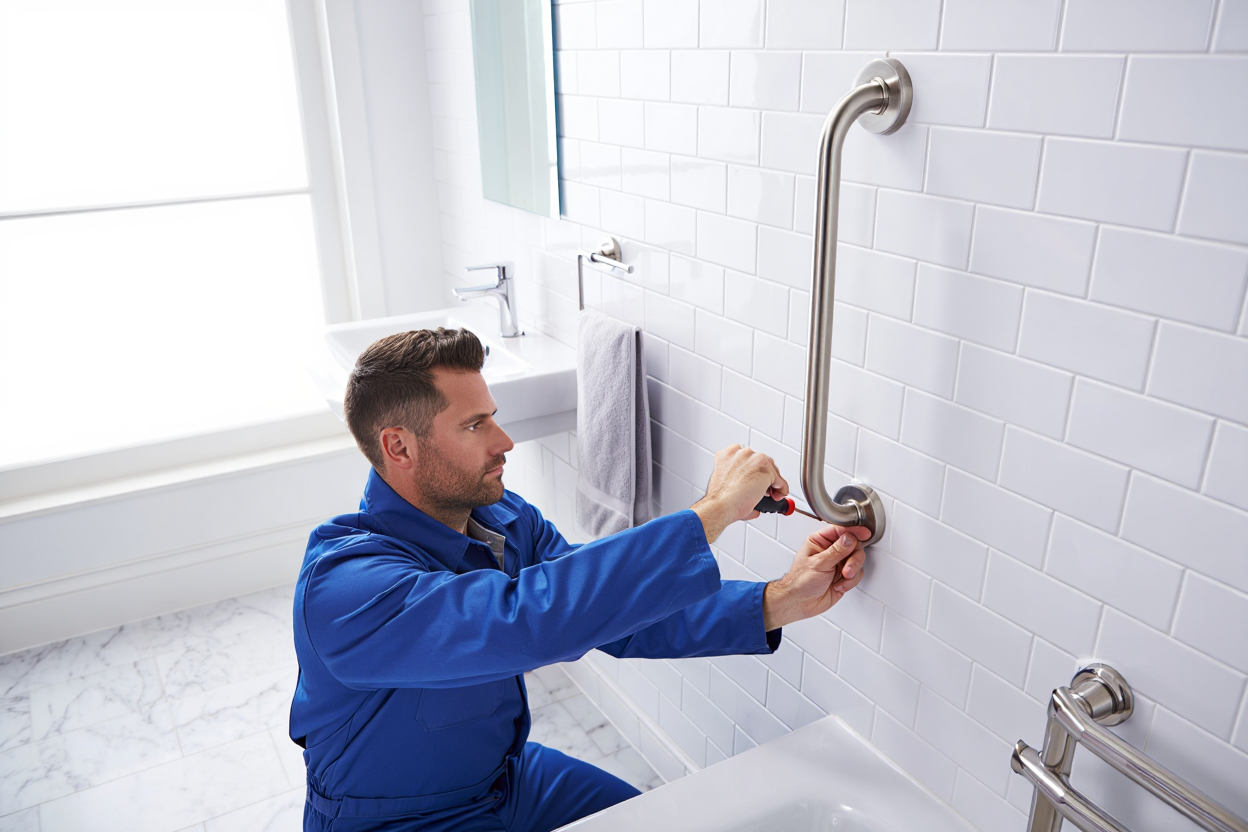
1. Run a room-by-room fall risk assessment
Check flooring transitions, lighting, stair edges, and bathroom access points. Small hazards account for many preventable in-home injuries.
2. Match solutions to mobility level, not age alone
Use current ability and physician guidance to choose modifications and support tools. Personalized matching avoids overspending on low-value upgrades.
3. Prioritize emergency communication access
Ensure phones, alert devices, and contact cards are reachable in bedrooms, bathrooms, and common areas.
4. Build a monthly affordability cap
Account for equipment, subscriptions, prescriptions, and transport so support choices remain sustainable over time.
5. Start with high-impact bathroom safety changes
Grab bars, non-slip surfaces, and shower seating are often among the fastest interventions for risk reduction.
6. Improve pathway lighting and contrast
Motion night lights and high-contrast stair markings improve navigation and confidence, especially at night.
7. Compare service plans by total annual cost
For phone, alert, or care-support services, annual cost and cancellation flexibility matter more than teaser monthly rates.
8. Create a medication and appointment command center
Use one visible station for schedules, refill dates, and provider contacts to prevent missed doses or duplicate visits.
9. Review supports every 90 days
Needs can change quickly after health events. Quarterly check-ins keep plans aligned and prevent outdated routines.
10. Practice emergency scenarios with family
Run simple drills for falls, power loss, and communication outages so everyone knows exact next steps.
11. Track utilization of paid services
If a subscription tool is rarely used, re-evaluate coverage level or vendor. Data-driven pruning protects fixed income budgets.
12. Document legal and care preferences clearly
Keep updated copies of key directives and contacts where trusted family can access them quickly.
Bonus Tip
Use a one-page independence score (mobility, safety, communication, cost, confidence) at each quarterly review to spot trend changes before they become crises.
What to Avoid
- Installing equipment without confirming wall support or code
- Choosing plans based only on promotional pricing
- Assuming one-time setup solves long-term needs
- Keeping emergency contacts scattered across devices
- Ignoring usability feedback from the senior using the system