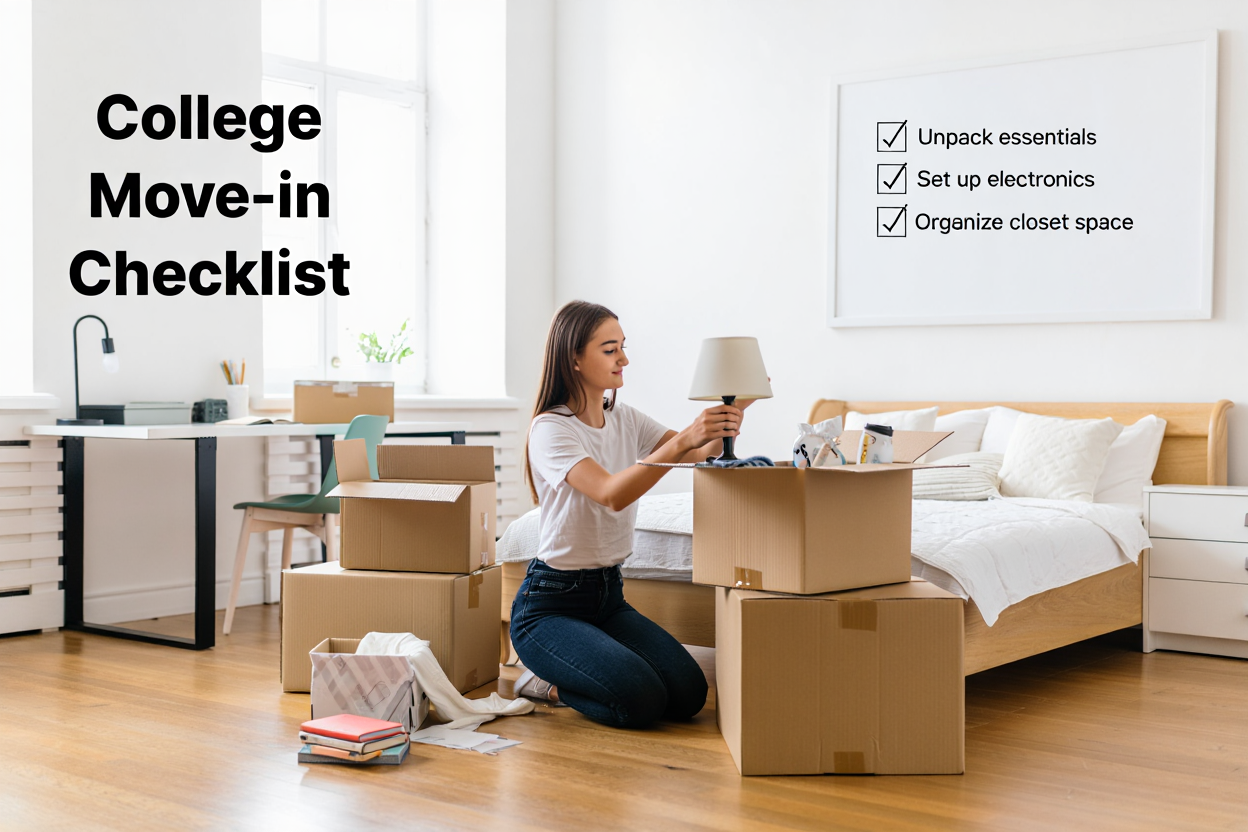
8-10 Weeks Before Move-in
-
Review housing assignment and meal plan
Room size, layout, and roommate info determine what to bring and space planning
-
Connect with roommate(s) to coordinate
Prevents duplicate items like refrigerators, microwaves, and large electronics
-
Research campus resources and services
Understanding dining, laundry, transportation, health services affects what to pack
-
Order textbooks and check rental options
Early ordering saves money; rental services may have better availability
-
Set up student bank account and credit card
Financial independence tools; many banks offer student benefits
-
Research local area around campus
Find nearby shopping, restaurants, entertainment, emergency services
-
Start shopping for dorm essentials gradually
Spread out costs and take advantage of back-to-school sales
-
Plan family visit schedule
Coordinate parents' weekend, holidays, and pickup dates early
4-6 Weeks Before Move-in
-
Complete final shopping for essentials
Ensure all needed items are ready; avoid last-minute stress shopping
-
Coordinate move-in day logistics
Parking, elevator access, helping hands require advance planning
-
Submit health forms and immunizations
Required for enrollment; some vaccines need time to take effect
-
Set up student email and technology accounts
Campus WiFi, student portal, online learning platforms need configuration
-
Plan for prescription medication management
Ensure adequate supply and transfer prescriptions to campus/local pharmacy
-
Research campus involvement opportunities
Clubs, organizations, activities help with social integration and networking
-
Set up streaming services and entertainment
Shared accounts, gaming setups, music services for dorm life
-
Plan farewell activities with friends
Closure with high school friends; maintaining important relationships
2 Weeks Before Move-in
-
Pack systematically with labeled storage
Organized packing speeds up move-in day and room setup
-
Confirm move-in appointment time
Scheduled move-in times prevent chaos and long waits with loaded vehicles
-
Prepare important documents folder
ID, insurance cards, medical info, emergency contacts readily accessible
-
Download campus apps and maps
Navigation, dining, events, emergency alerts all have dedicated apps
-
Set up parent communication expectations
Establish healthy communication frequency and methods
-
Plan first week meals and essentials
Campus dining may not start immediately; basic supplies needed
-
Pack comfort items and personal touches
Familiar items ease homesickness and make dorm feel like home
-
Create emergency contact list
Campus security, health center, local emergency services, family contacts
Move-in Day
-
Arrive during scheduled time window
Organized move-in prevents traffic jams and reduces wait times
-
Check in and get room key/access cards
Official check-in activates student status and room access
-
Do room condition inspection with photos
Document existing damage to avoid charges when moving out
-
Meet roommate(s) and coordinate space
Establish boundaries and sharing agreements from day one
-
Set up bed and essential furniture first
Functional sleeping and study space needed immediately
-
Test all electronics and internet connection
Ensure technology works before parents leave and stores close
-
Buy any forgotten essentials locally
Last chance to get needed items with parent transportation and funding
-
Attend parent and student orientation
Important information about policies, resources, and expectations
First Week on Campus
-
Complete student orientation activities
Social connections and campus familiarity are crucial for adjustment
-
Set up campus services accounts
Dining plan, laundry card, library access, gym membership
-
Learn campus transportation system
Bus routes, bike paths, parking options for getting around efficiently
-
Visit academic advisor and register for classes
Finalize course schedule and understand graduation requirements
-
Join clubs and organizations
Social connections and resume building through campus involvement
-
Establish study routines and spaces
Academic success requires good study habits and environments
-
Explore local area and amenities
Find shopping, dining, entertainment, services near campus
-
Check in with family about adjustment
Maintain support connections while establishing independence
Pro Tips
Coordinate with roommates to avoid bringing duplicate large items like fridges and microwaves
Shop at local stores near campus rather than shipping everything - supports local economy and avoids shipping costs
Take photos of room setup for insurance purposes and to recreate successful arrangements
Keep first semester expenses reasonable - students often over-buy and regret excess purchases
Establish communication expectations with parents early to balance independence and family connection
Common Mistakes to Avoid
Bringing too much clothing - most dorms have limited closet and storage space
Not communicating with roommates beforehand, leading to duplicate items and space conflicts
Forgetting essential documents like insurance cards and prescription information
Over-packing comfort items that take up valuable space in small dorm rooms
Not researching campus resources, missing out on valuable support services and opportunities