Best TVs for Gaming (2026): Top 10 Picks
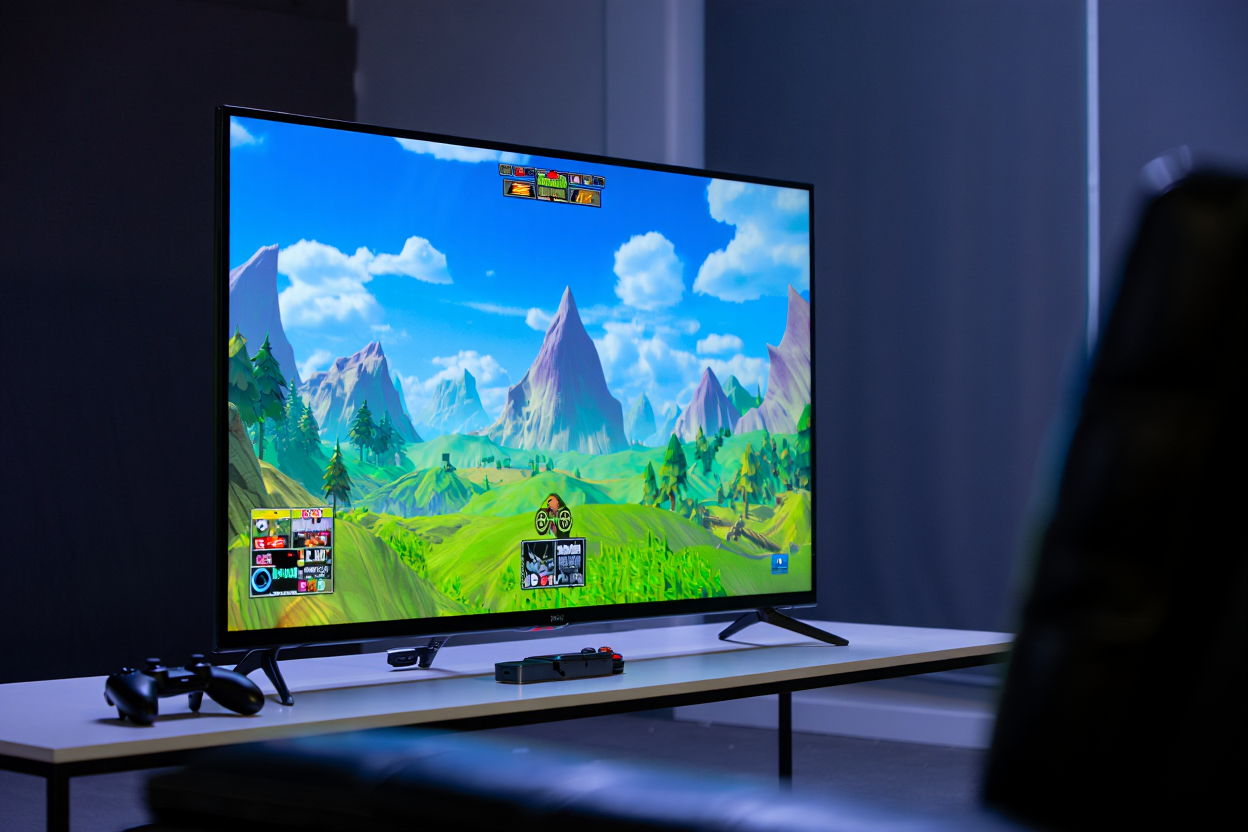
Best TVs for Gaming (2026): Top 10 Picks — hero image

Discover the ultimate gaming TVs for 2026. Featuring low input lag, high refresh rates, HDMI 2.1 support, and stunning 4K visuals for both console and PC gaming enthusiasts.

Quick Comparison

Rank Product Best For Rating
#1 LG C4 OLED 55-inch LG Premium console and PC gaming with perfect blacks ★★★★½ 4.5/5 View on Amazon
#2 Samsung QN90D Neo QLED 65-inch Samsung Bright room gaming and anti-glare performance ★★★★½ 4.5/5 View on Amazon
#3 Sony Bravia XR A95L QD-OLED 55-inch Sony Color accuracy enthusiasts and PS5 gaming ★★★★½ 4.5/5 View on Amazon
#4 TCL C845K Mini LED 65-inch TCL Budget-conscious gamers wanting premium features ★★★★½ 4.5/5 View on Amazon
#5 Hisense U8N ULED 55-inch Hisense Mid-range gaming with excellent HDR brightness ★★★★½ 4.5/5 View on Amazon
#6 ASUS ROG Strix OLED XG27AQDMG 27-inch ASUS Competitive PC gaming and esports ★★★★½ 4.5/5 View on Amazon
#7 LG G4 OLED 77-inch LG Large screen gaming enthusiasts ★★★★½ 4.5/5 View on Amazon
#8 Samsung The Frame 55-inch Samsung Living room gaming with aesthetic appeal ★★★★½ 4.5/5 View on Amazon

Detailed Reviews

#1
Editor's Pick Best for: Premium console and PC gaming with perfect blacks

LG C4 OLED 55-inch

by LG
$1299 – $1599
Editorial pick

Pros

  • Perfect blacks and infinite contrast
  • 0.1ms response time
  • 4 HDMI 2.1 ports
  • 120Hz native refresh rate
  • Dolby Vision gaming

Cons

  • Risk of burn-in with static UI
  • Expensive
  • Bright room reflections

Key Specs

Hdr HDR10, Dolby Vision, HLG
Input Lag 5.2ms at 4K/120Hz
Hdmi Ports 4x HDMI 2.1
Resolution 4K (3840x2160)
Display Type 55-inch OLED
Refresh Rate 120Hz

Our Verdict

The gold standard for gaming TVs with unmatched picture quality and gaming features.

As an Amazon Associate, we earn from qualifying purchases.

#2
Best for: Bright room gaming and anti-glare performance

Samsung QN90D Neo QLED 65-inch

by Samsung
$1799 – $2299
Editorial pick

Pros

  • Excellent anti-glare coating
  • Very bright HDR
  • Great color accuracy
  • Low input lag
  • Gaming Hub built-in

Cons

  • More expensive than OLED
  • Blooming in dark scenes
  • Complex menu system

Key Specs

Hdr HDR10, HDR10+, HLG
Input Lag 9.2ms at 4K/120Hz
Hdmi Ports 4x HDMI 2.1
Resolution 4K (3840x2160)
Display Type 65-inch Neo QLED
Refresh Rate 120Hz

Our Verdict

Best choice for bright gaming rooms with excellent HDR performance and minimal glare.

As an Amazon Associate, we earn from qualifying purchases.

#3
Best for: Color accuracy enthusiasts and PS5 gaming

Sony Bravia XR A95L QD-OLED 55-inch

by Sony
$2499 – $2999
Editorial pick

Pros

  • QD-OLED technology
  • Perfect for PS5
  • Excellent color accuracy
  • Great processing
  • Premium build quality

Cons

  • Very expensive
  • Only 2 HDMI 2.1 ports
  • Burn-in risk

Key Specs

Hdr HDR10, Dolby Vision, HLG
Input Lag 8.5ms at 4K/120Hz
Hdmi Ports 2x HDMI 2.1, 2x HDMI 2.0
Resolution 4K (3840x2160)
Display Type 55-inch QD-OLED
Refresh Rate 120Hz

Our Verdict

Premium choice for PS5 owners who prioritize color accuracy and processing quality.

As an Amazon Associate, we earn from qualifying purchases.

#4
Best for: Budget-conscious gamers wanting premium features

TCL C845K Mini LED 65-inch

by TCL
$899 – $1199
Editorial pick

Pros

  • Excellent value for money
  • Mini LED backlighting
  • 144Hz VRR support
  • Good HDR performance
  • Low input lag

Cons

  • Processing not as refined
  • Build quality concerns
  • Limited local dimming zones

Key Specs

Hdr HDR10, HDR10+, Dolby Vision
Input Lag 7.1ms at 4K/120Hz
Hdmi Ports 2x HDMI 2.1, 2x HDMI 2.0
Resolution 4K (3840x2160)
Display Type 65-inch Mini LED QLED
Refresh Rate 144Hz

Our Verdict

Outstanding value offering premium gaming features at a fraction of flagship prices.

As an Amazon Associate, we earn from qualifying purchases.

#5
Best for: Mid-range gaming with excellent HDR brightness

Hisense U8N ULED 55-inch

by Hisense
$699 – $999
Editorial pick

Pros

  • Very bright HDR
  • Good local dimming
  • 144Hz gaming
  • Competitive pricing
  • Good color gamut

Cons

  • Motion processing issues
  • Blooming in dark content
  • Average build quality

Key Specs

Hdr HDR10, HDR10+, Dolby Vision
Input Lag 8.7ms at 4K/120Hz
Hdmi Ports 2x HDMI 2.1, 2x HDMI 2.0
Resolution 4K (3840x2160)
Display Type 55-inch ULED
Refresh Rate 144Hz

Our Verdict

Great middle-ground option offering solid gaming performance without breaking the bank.

As an Amazon Associate, we earn from qualifying purchases.

#6
Best for: Competitive PC gaming and esports

ASUS ROG Strix OLED XG27AQDMG 27-inch

by ASUS
$899 – $1099
Editorial pick

Pros

  • 240Hz OLED panel
  • 0.03ms response time
  • Perfect for competitive gaming
  • USB-C with power delivery
  • Excellent color accuracy

Cons

  • Smaller 27-inch size
  • Limited console benefits
  • OLED burn-in risk

Key Specs

Hdr HDR10, DisplayHDR True Black 400
Input Lag 2.1ms
Hdmi Ports 2x HDMI 2.1, DisplayPort 1.4
Resolution 1440p (2560x1440)
Display Type 27-inch OLED
Refresh Rate 240Hz

Our Verdict

Ultimate competitive gaming display for PC gamers who prioritize speed over size.

As an Amazon Associate, we earn from qualifying purchases.

#7
Best for: Large screen gaming enthusiasts

LG G4 OLED 77-inch

by LG
$2999 – $3799
Editorial pick

Pros

  • Massive 77-inch screen
  • Gallery design
  • α11 AI processor
  • Perfect blacks
  • 4 HDMI 2.1 ports

Cons

  • Very expensive
  • Requires large space
  • Burn-in considerations

Key Specs

Hdr HDR10, Dolby Vision, HLG
Input Lag 5.2ms at 4K/120Hz
Hdmi Ports 4x HDMI 2.1
Resolution 4K (3840x2160)
Display Type 77-inch OLED
Refresh Rate 120Hz

Our Verdict

The ultimate immersive gaming experience for those with space and budget for a massive display.

As an Amazon Associate, we earn from qualifying purchases.

#8
Best for: Living room gaming with aesthetic appeal

Samsung The Frame 55-inch

by Samsung
$1199 – $1499
Editorial pick

Pros

  • Art mode when not gaming
  • Customizable bezels
  • Anti-reflection coating
  • Game Mode Pro
  • Aesthetic integration

Cons

  • Higher input lag than dedicated gaming TVs
  • Limited HDR brightness
  • Premium for aesthetic features

Key Specs

Hdr HDR10, HDR10+, HLG
Input Lag 11.1ms at 4K/120Hz
Hdmi Ports 4x HDMI 2.1
Resolution 4K (3840x2160)
Display Type 55-inch QLED
Refresh Rate 120Hz

Our Verdict

Perfect for gamers who want their TV to double as wall art when not in use.

As an Amazon Associate, we earn from qualifying purchases.

#9
Best Budget Best for: Budget gaming with smart TV simplicity

Roku Plus Series 65-inch

by Roku
$449 – $599
Editorial pick

Pros

  • Excellent value
  • Simple Roku interface
  • Good color accuracy
  • Low input lag
  • Easy setup

Cons

  • No HDMI 2.1
  • Limited to 60Hz
  • Basic HDR performance

Key Specs

Hdr HDR10, HDR10+, Dolby Vision
Input Lag 14.2ms at 4K/60Hz
Hdmi Ports 4x HDMI 2.0
Resolution 4K (3840x2160)
Display Type 65-inch QLED
Refresh Rate 60Hz

Our Verdict

Great budget option for casual gamers who don't need advanced gaming features.

As an Amazon Associate, we earn from qualifying purchases.

#10
Best for: PC gaming with ultrawide immersion

Alienware AW3225QF 32-inch

by Dell
$1199 – $1499
Editorial pick

Pros

  • 4K QD-OLED ultrawide
  • 240Hz refresh rate
  • Excellent for racing/flight sims
  • RGB lighting
  • USB-C hub

Cons

  • Ultrawide not ideal for console gaming
  • Expensive for size
  • OLED burn-in risk

Key Specs

Hdr HDR10, DisplayHDR True Black 400
Input Lag 2.8ms
Hdmi Ports 2x HDMI 2.1, DisplayPort 1.4
Resolution 4K UW (3840x2160)
Display Type 32-inch QD-OLED Ultrawide
Refresh Rate 240Hz

Our Verdict

Premium ultrawide choice for PC gamers seeking maximum immersion in compatible games.

As an Amazon Associate, we earn from qualifying purchases.

Buying Guide

Key Factors to Consider

Input Lag

Critical

Lower is better for responsive gaming. Look for under 20ms total, with under 10ms being ideal for competitive gaming.

Refresh Rate

High

120Hz minimum for modern consoles and smooth PC gaming. 240Hz+ is ideal for competitive PC gaming.

HDMI 2.1 Support

High

Essential for 4K 120Hz gaming on PS5, Xbox Series X, and high-end PC graphics cards. Enables VRR and ALLM.

HDR Performance

Medium

Good HDR enhances gaming visuals significantly. Look for HDR10 support with high peak brightness.

Screen Size

Medium

Larger screens increase immersion but require more space. 55-65 inches is the sweet spot for most gaming setups.

Display Technology

Medium

OLED offers perfect blacks but risks burn-in. QLED is brighter with no burn-in but less contrast.

⚠️ Things to Avoid

  • TVs with input lag over 30ms
  • Models without Game Mode
  • TVs with only HDMI 2.0 ports if you have next-gen consoles
  • Displays with poor motion handling
  • TVs with aggressive motion smoothing that can't be disabled

Budget Tiers

💰 Budget

$400-800

60Hz gaming, HDMI 2.0, basic HDR. Good for casual console gaming and older PC hardware.

💎 Mid-range

$800-1,500

120Hz, HDMI 2.1, VRR support, good HDR. Perfect for PS5/Xbox Series X gaming.

👑 Premium

$1,500-4,000+

OLED/high-end QLED, 240Hz options, perfect gaming features, premium build quality.

Frequently Asked Questions

What input lag is acceptable for gaming?
For competitive gaming, aim for under 20ms total input lag, with under 10ms being ideal. Casual gamers can tolerate up to 30ms without noticeable issues.
Do I need HDMI 2.1 for gaming?
Yes, if you have a PS5, Xbox Series X, or modern PC graphics card. HDMI 2.1 enables 4K 120Hz gaming, VRR (Variable Refresh Rate), and Auto Low Latency Mode.
Is OLED or QLED better for gaming?
OLED offers perfect blacks and fastest response times but risks burn-in with static UI elements. QLED is brighter, has no burn-in risk, but slightly worse contrast. Both are excellent for gaming.
What size TV is best for gaming?
55-65 inches is ideal for most gaming setups, providing good immersion without overwhelming your field of view. Consider your room size and seating distance when choosing.
Should I worry about OLED burn-in for gaming?
Modern OLEDs have improved burn-in resistance, but static UI elements can still cause issues over time. Enable pixel shifter, use auto-brightness, and vary content to minimize risks.